A high school economics teacher helps students discover how money can be a tool for good.
Many young adults have downloaded investing apps and even tried trading. Far fewer know how to evaluate a business, build a long-term financial plan or understand how economic events shape the markets. That is why financial literacy matters.
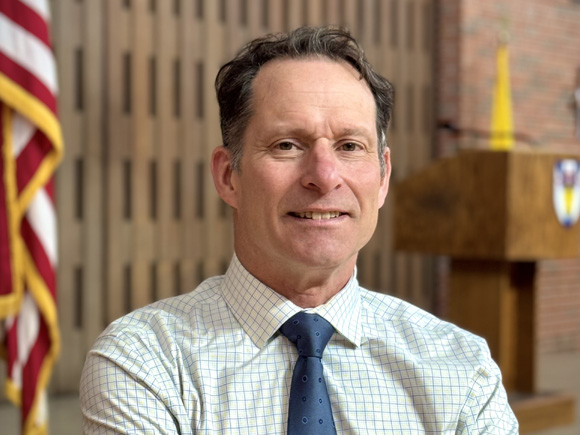 For Dean S., an economics teacher at Saint Thomas Academy in Mendota Heights, Minnesota, financial education is about much more than teaching students how to buy stocks. It’s about helping them develop the confidence and knowledge to make sound financial decisions throughout their lives while using those skills to serve others.
Dean, a spring 2026 winner of Catholic Financial Life’s Catholic Teachers Give Back Contest, has spent nearly a decade helping hundreds of students do exactly that through the school’s unique Cadet Fund. The student-managed investment portfolio has grown from an initial $17,000 donation into a fund of over $160,000 today.
Not only is he teaching fiscal responsibility, Dean is also setting an example in giving back. He set the fund up so that once it exceeded $100,000, investment earnings became eligible to help cover tuition costs for students in need of financial assistance to attend Saint Thomas Academy. The fund reached that milestone in 2025, and over $15,000 has already been distributed to the financial aid program.
Real Dollars, Real Lessons
The idea for the Cadet Fund was born when Saint Thomas Academy introduced a new schedule during the 2017-18 school year that created room for additional electives. Dean initially used stock market simulation games in the course, but he wanted students to experience something more meaningful, so for the 2019-20 academic year, he launched the Cadet Fund.
“I thought the students would be more receptive to a real dollar fund, making real-life decisions about what people do with investments,” he says.
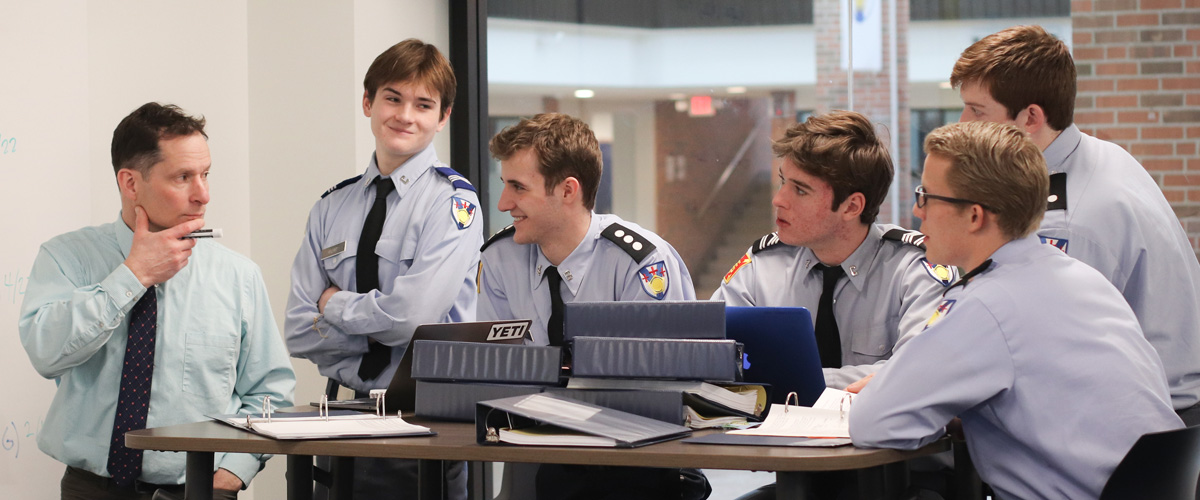
Up to 50 seniors participate each year in the personal finance and investment course, which has grown in popularity to the point of having a waitlist. Every dollar in the Cadet Fund is managed by students as part of the curriculum. Rather than day trading or chasing quick gains, students inherit the portfolio from the previous academic year, evaluate existing holdings, research potential investments and make recommendations based on long-term performance.
“We’re not investing in stocks— we’re investing in businesses and what they do with the products and services they provide,” Dean says.
Looking Beyond Quick Returns
The approach teaches students to think beyond stock prices and focus on the fundamentals of a company, even taking into account whether its values match those of the Catholic Church. It also helps them understand how global events can affect investments. Over the years, students have witnessed the market volatility of COVID-19, inflationary pressures, geopolitical conflicts and the rise of artificial intelligence. Those experiences have reinforced one of Dean’s most important lessons.
“Long-term strategy is a big lesson here,” he says.
That message is especially relevant for today’s young investors, many of whom have unprecedented access to trading platforms and financial information and are looking for quick returns, he says. Instead, he encourages students to slow down, do their research, diversify their investments and develop a plan. The lessons are making an impact.
Some former students have gone on to careers in finance and portfolio management or joined university investment funds. Others have pursued entirely different professions while continuing to manage their own investments and save for the future.
“Even if they don’t go into business and finance, they’re likely to manage their own finances in some capacity,” Dean says. “So, I feel it’s important from a true lifelong standpoint.”
Investing in Others
What makes the Cadet Fund especially distinctive is its mission. The purpose is not simply to grow a portfolio; it is to help future students access a Catholic education.
The fund’s earnings are directed to Saint Thomas Academy’s financial aid program, creating a cycle of stewardship in which students learn financial responsibility while helping support future classmates they may never meet. Student Jack S., Class of 2023, understood that responsibility firsthand.
“This is something that we have to take seriously,” he says. “This is the school’s money, and we’re working to get this fund up so it can be used for financial aid.”
For Dean, that sense of purpose elevates the experience beyond a typical finance class. Students learn that money can be a tool not only for personal success but also for serving others.
The class also benefits from alumni involvement, making the Cadet Fund a community effort rather than simply a classroom project. Former students remain engaged, offering guidance and helping strengthen the program’s connection to the broader Saint Thomas Academy community.
Building Confidence for Life
Dean hopes every student leaves his classroom with the confidence to participate in their own financial future.
“General awareness of investing and being involved in the process in some capacity would be the ultimate goal,” he says.
Through the Cadet Fund, students gain more than investment experience. They learn stewardship, responsibility, patience and service—lessons that will continue paying dividends long after graduation.